Examination or Approval?
“for you to examine that which is superior in order that you might be sincere and blameless for the Day of Christ,”
(Philippians 1:10)
Many of our English translations render the first part of the phrase, “that you may approve,” or something very similar. This is one of those remnants of the old King James English. In the 17th century, the word “approve” meant “to prove, to demonstrate, to show worthy” whereas today the idea of approval carries with it the connotations of permission. I might “approve” of that movie or of how you spend your money…or I might not approve.
The word that Paul uses here is dokima/zw (dokimazo), which carries with it the idea of examining something to determine its quality. The NIV chooses the word “discern” to insert here, which is arguably a better term. I chose the word “examine” to capture the idea that dokima/zw (dokimazo) implies a critical examination of such ideas…as we spoke above in verse 7 of the word frone/w (phroneo). Paul is not calling the Philippian church to give permission to those things that are superior and excellent, but he is calling them to examine that which they encounter so that they can critically discern that which is good and excellent…those things that will keep them sincere (we might say, “transparent” here) and blameless for the Day of Christ.
What is the Day of Christ? This is a reference back to the Old Testament notion of the “Day of the Lord” (see Isaiah 13:6; Jeremiah 46:10; Ezekiel 30:3; Joel 2:1; Obadiah 15; Malachi 4:5 and elsewhere). There was a notion in the ancient Mid-East that there would one day rise a king who was so mighty that he would defeat all of his enemies in a single day. That which the Old Testament prophets looked forward to was completed by Jesus on the Cross. Yet, the New Testament authors carried the idea into the Church age as a time when we anticipate the return of our Lord (see 1 Corinthians 5:5; 1 Thessalonians 5:2; 2 Thessalonians 2:2; 2 Peter 3:10). Indeed, on that great day, all of the enemies of God will be gathered together and destroyed underneath his crushing foot (Revelation 20:7-10). Will you be ready for that day?
Until that day takes place, Paul sets before us once again the significance of examining things around us carefully…not with our passions but with a renewed mind (Romans 12:2) where you examine (and pursue) that which is good and pure and excellent and right so that we will have nothing to hide from or be ashamed from on that great and awesome day. How far short of that goal we tend to fall, though. Will you, this day, this minute even, turn to God and repent of your wayward heart and draw closer to Him? Discern what is good and excellent and flee from that which you would keep hidden in the dark recesses of a wicked heart.
Love guarded by Knowledge and Discernment
“And this is my prayer: that your love might overflow more and more in knowledge and all discernment.”
(Philippians 1:9)
And so, out of Paul’s love for his friends in the church in Philippi, he offers up his prayer for them as they seek to grow in their spiritual maturity. He begins with a prayer for agape love…there are several different words in the Greek to reflect different aspects of love; agape love reflects the idea of a sacrificial love that loves regardless of whether the love is reciprocated on the part of the beloved. Ultimately, it is the love demonstrated by Christ who died for the sins of the elect while we were yet dead in our sin and in rebellion against the King of Heaven. It is also the kind of love that all believers are to strive toward as we live our our lives in community…as the old hymn based on John 13:35 goes: “They shall know we are Christians by our love.”
But notice something. Often Christians seem to end there when they talk about God’s design for our lives. There is an assumption that we are just to love one another, love the world, and all will be happy. And what we end up with oftentimes is this mushy, sappy, love that has no real backbone to it. Yet, Paul does not end his prayer here. Paul asks that the agape love that the church would have would indeed overflow (arguably a reference to Psalm 23:5), but that it would overflow in knowledge and discernment.
In other words, love does not stand on its own, but is guarded and guided by something else in the life of the believer. The term that Paul uses for knowledge is ejpi/gnwsiß (epignosis), which is typically used to refer to a knowledge of the transcendent — a knowledge of that which is outside of you, whether moral or spiritual. And while the term ai¡sqhsiß (aisthasis), which we translate here as “discernment” only shows up once in the New Testament, in the Greek translation of the Old Testament, it is found 22 times in the Book of Proverbs (no great surprises there). Thus, according to Paul’s prayer for spiritual maturity, love does not stand alone, it is accompanied by both the knowledge of God and the discernment that comes from the fear of the Lord.
The idea virtue seems to have been replaced by freedom in our culture today. People champion personal expression and personal pleasure over the idea of chivalry, honor, integrity, and duty. People seem to value personal experience over transcendent truth. And that shift is a dangerous one for the culture; more significantly, it is our calling as a church to pull the culture back from the edge of the cliff. But we cannot do that unless we, as Christians who make up the church, also embrace a Biblical model of knowledge and discernment that guides and guards our love. May indeed Paul’s prayer for the church in Philippi be a prayer that we embrace in our lives and may we strive to cultivate the knowledge of God (found in the scriptures) and godly discernment (begun with a fear of the Lord) in our lives in every way.
My Fear…
“For God is my witness how I long for all of you with the affection of Christ Jesus.”
(Philippians 1:8)
What a beautiful line this is as he expresses his desire to be with the Philippian believers. His desire is to be with them and the desire is great. This is more than a man simply being homesick while he sits in chains, wishing to be out of bondage. Were this simply an expression of Paul’s homesickness, we could write this statement off, but such would not be consistent with the character of the Apostle Paul who has discovered (as he will later write) that he has discovered how to be content in all things. Here is a man with a genuine affection for the church of Jesus Christ.
As we reflect on the nature of Paul’s affection for the church, it ought to cause us to ask whether we share the same affection for Christ’s church in our midst. Do we love the people of Christ’s church in the same manner or with the same intensity as Jesus loves them? Would we gladly be willing to suffer for the church? Would we gladly be willing to die for the church? If not, are we ready to repent? For is this not the model to which we are called? And if we are not able to love other believers, with whom we will spend eternity and with whom we are counted as one body, then how will we show the love of Christ toward unbelievers?
Loved ones, my fear is that the church has fallen into the trap of living with a wester-self-centered mindset. My fear is that the church has fallen into the trap of living for itself rather than sacrificing itself for others. My fear is that the church would not be able to say with the Apostle Paul, “how I long for all of you with the affection of Christ Jesus.” And if my fears are true, what of our witness to a watching world? May the world look upon us as a people that seek to serve Christ and not ourselves nor our institutions. And as the world looks at us, and sees the love of Christ in us for one another, may the world desire to partake of that which God has done in us.
Feelings…Nothing More Than Feelings…Argh!
“In so far as it is right for me to think this way regarding all of you, because you are in my heart, in both the chains and in the defense and validation of the Gospel, all of you are partakers of grace with me.”
(Philippians 1:7)
This is one of those points that, when I look at our modern translations, I just want to say, “Bah!” and “Shame on you!” Grump… Okay, now that I have that out of my system, let me explain why. You see, in our modern culture, people tend to make decisions based on their feelings and not based on their reason. People say, “what do you feel” about such and such when they ought to be asking, “what do you think” about such and such. The heart is deceitful above all things (Jeremiah 17:9) and we ought not to rely upon it for life decisions…we ought to rule over our hearts with a renewed and sanctified mind (Romans 12:2).
Okay, with all of that in mind (not in heart), we arrive at Philippians 1:7 and we find (in our modern translations) the Apostle Paul telling the Philippian church how he “feels” towards them. Bah! Shame on you, ESV, NIV, NASB, and other translation committees for bowing to the culture on this. Yes, this is how the culture communicates, but it is not how the Apostle Paul communicated. And while I am not always fond of the KJV/NKJV translations, to ye who have provided such, may God be praised, for you have chosen to be faithful to Paul and not to the modern culture. For the word that Paul uses here in the first part of this verse is frone/w (phroneo), which means “to think about something, to hold an opinion on a matter, to reason in such a way, to give careful consideration to something, or to develop an attitude on something because of careful thought.” The term has nothing to do with one’s feelings and everything to do with the way one thinks. Let God be true and every man a liar! Ha, it is truth we are after, it is what is reasonable that we seek, not what the fickle heart might set its affections upon; it is not about what we may feel. How far we have fallen as a culture to permit feelings to trump reason!
Thus, as the Apostle Paul reflects on the Christians in Philippi, he discerns that it is correct, accurate, and proper to think in this manner concerning the other believers (to rejoice in them, as he speaks in the previous verse, and to count them fellow partakers, as he speaks in this verse). Why is it right to think of these believers in a positive way? Because through their gift and through their prayers they have become fellow workers, even partakers, with Paul in his labors — even his labors from behind chains.
It is a remarkable statement that Paul is making here, that through prayer and support, we become partakers in the work of the Gospel just as we are partakers in the grace of the Gospel given to us by Jesus Christ. At the same time, ought that not be the case? Ought it not be the case that having received the grace of God, we would desire to support those called to take the Gospel to other regions in the world? Ought it not be the case that having received the grace of God that we would be burdened with a desire to pray for those who are actively laboring in such a task and for those facing difficulties and persecution for having done so? Ought it also not be the case that we find ourselves yearning to share this good news also with those in our own midst, to participate in the task of the Gospel actively by living it out and by reasoning with others about Christ? Or, have we become too busy, too distracted, and too self-centered to do so? My prayer is that were the Apostle Paul with us today, he would say of our church, “It is right for me to think this way of you.” And it is my prayer that when we hear the judgment of Christ, what we hear is, “Well done.” May Jesus think this way about us as well.
I am Persuaded
“being persuaded of this: that the one who began a good work in you will accomplish it until the day of Christ Jesus.”
(Philippians 1:6)
This verse is well known to many of us, and what a beautiful statement it is and indeed, it is the true source of joy for Paul as he reflects upon the dear saints in the Philippian church. Yes, they have been his helper and have provided him with a gift so he may continue the work of ministry in Rome, but more importantly, Paul has the assurance that the work the Spirit began in this church will be continually worked out in faith until that glorious day when our Lord and Savior, Jesus Christ will return.
The language of the “Day of Christ Jesus” is a reference to the Old Testament language of “The Day of the Lord.” In the ancient cultures there was a notion that one day there would come a king who would be powerful enough to defeat all of his enemies in a single day and thus conquer the known world. Indeed, the ancient world never saw such a king for the one to whom that pointed was Christ Jesus. And indeed, on the cross, Jesus slew the great and powerful enemy, Satan, and demonstrated that he had defeated death by raising from the dead on the third day. In addition, when our Lord comes again, the scriptures speak of a time when all of the armies of the world will raise up against the righteous one and will be crushed under the foot of our Lord’s judgment. Indeed, what a glorious day that will be!
In the meantime, there is a promise that we can cling to as well. The work that has been begun in us by God is not work that rests on our skills or abilities to bring to completion. Indeed, it rests on God for His completion. And that is good news. How easy it is, sometimes, to get discouraged that the work you are seeking to do in a church, in a community, or even in a family is not bearing much fruit or any fruit at all. We set our timetables and our agendas for such things, but God has his own timetable and it is in God’s timetable that we must learn to trust and it is in his power (not our efforts) we must learn to rely. For indeed, as Paul says of this church, I too am persuaded that our God is able to continue his work in this world and even in this particular church until that day when he sends his Son to bring judgement upon his enemies once and for all time.
A Military Model
“I give thanks to my God for every remembrance of you, always and every prayer of mine for all of you, making prayer with gladness because of your fellowship in the Gospel from the first day until now.”
(Philippians 1:3-5)
In the military, there is something that they refer to as a “Tooth-to-Tail Ratio (T3R).” This is a measurement of the ratio between combat troops who are fighting on the front lines and the support personnel. While this ratio has varied between different wars and at different points in history, the idea that if someone is going to be on the front lines that they need people who can support them, is a practical one that dates even back to Roman times.
As Christians in the west, we often struggle to think of the church according to military terms. Things seem to be at peace and we have relative freedom to worship in the way we wish. At the same time, our real enemy is not flesh and blood. Our enemy is found in the spiritual forces of evil that are at work in this world and if we are going to tell ourselves that such forces are not at work in the west, we are deceiving ourselves and hiding our heads from reality. Indeed, those forces may be more visible in the oppression that Christians face elsewhere, but Satan is indeed at work in our lives, tempting us with sin and placing stumbling blocks in our midst while at the same time, twisting and warping the culture in such a way that people around us celebrate death and Satan rather than celebrating life and God. Whether we like it or not, the church is a church at war.
And since we are at war, it is useful to remember once again that soldiers on the front lines need teams to support them. How then does this apply? First of all, in many cases our missionaries are on the front lines…and not just our missionaries on other continents, but local missionaries in our communities that focus on reaching the poor, addicts, or perhaps a hard-to-reach group of people. Yet, let’s not stop there. The primary task of church leadership is to equip the saints for the work of ministry. That means the saints (all the saints) are given a job to do. Those who are still at work or in the community are again on the front lines in a sense and the job of the church leadership is to make sure that they have the tools they need to lead Bible Studies or evangelize co-workers, family members, and people in the community. Many of our older members may not feel that they are engaged on the front lines any longer (though often a nursing home is a great field for evangelism!), but here they are given the wonderfully blessed task of committing time to prayer for specific believers and teams of people who are on the front lines as it were — not to mention for the wisdom and equipping work of the church leadership. Our children, who are being prepared for the front lines can also be taught to pray for those in the church as well. Done well, in a multi-generational church, this creates a huge pool of “support personnel” for those on the front lines.
As Paul is reflecting on the Philippians, he recognizes how significant their support has been to his ministry and that recognition causes him to celebrate and to thank God for the gift of those who have assisted him in ministry through their financial gifts, through their presence, and through their prayers. That said, I wonder how often, when we face trials on the front lines of spiritual battle, we recognize that we have a large group behind us, strengthening and supporting us with their prayers and sometimes even, with their resources. As a pastor, I am truly grateful not only for the commitment of my people to supporting my family so that I can focus my attention on equipping the body for ministry as a full-time vocation. Having been bi-vocational before and having many pastor-friends who are bi-vocational, this is a privilege I do not take for granted. In addition, I am thankful that the leadership of my congregation also recognizes that while my ministry begins on the hill here in New Sewickley Township, PA, it does not end on the hill here, but through technology, can extend to other places in the world through blogs, books, and other forms of communication. And indeed, I make my prayers with gladness for the support personnel that stand behind me in prayer and provision. Let us all not think of ourselves as lone-believers on the battlefield, but as members of a larger body — a network of believers brought together as a church to do a task: make disciples and tear down the powers of Satan in our world. We are a people at war, let us not forget that.
Grace and Peace to you…
“Grace to you and peace from God our Father and the Lord Jesus Christ.”
(Philippians 1:2)
When you greet others who are Christians, how do you greet them? Do you have a sincere wish for them that God would give them grace and peace or do you greet them begrudgingly, perhaps because of something that has happened between the two of you in the past? Or, do you even think about these things at all? Do you just say, “Hello, how are you?” and then just keep on walking satisfied in the pleasantries but not really caring about the answer to your question. Isn’t it interesting, so often, that we want people to be genuinely concerned about our welfare or about what we happen to be doing but don’t have the same concern about our neighbor…even that neighbor who happens to be a believer in Jesus Christ.
Paul sets for us a model that would serve us well to follow. May God give you grace and peace. The idea expressed by Grace as Paul presents it is that of God having a disposition of goodwill toward you, that he might bless your steps and your actions and that the world indeed would see God’s hand in your life. This is not a health-wealth or prosperity Gospel, though. For the evidence of God’s grace is not seen in money or physical well-being, Paul presents the evidence of God’s grace as peace in your life. Peace denotes a resting in God’s hand of mercy. It is a deliverance from the Evil One and his power. And later in this letter, Paul will refer to this peace as that which “passes all understanding” (Philippians 4:7), because it is a peace that can be had despite the fact that you are facing trials in this life. Such peace, such resting in God’s mercy, is the result of God’s gracious hand upon your life (and while not always, often abundant wealth is a sign of God’s judgment…).
Yet, Paul also makes it clear where this grace and peace come from…God. Grace and peace are not found in wealth, careers, politics, sports teams, fancy cars, electronics, entertainment, computers, movies, status, fame, or anything else we might think of that captures our attention (and sadly also, our hearts). True grace and peace come from the hand of God and thus we should seek it in no other place but in God alone. How often we fall into the trap of looking elsewhere. John the Apostle closed his first letter with the words, “protect yourself from idols.” Indeed, how we need to here those words over and over again. And while we do that, may we train ourselves to take a genuine interest in one another’s welfare and the condition of their soul. Such is the heart behind the command to love your neighbor as yourself.
Elders and Deacons
“Paul and Timothy, slaves of Christ Jesus, to all the holy ones in Christ Jesus who are in Philippi, with the overseers and deacons.”
(Philippians 1:1)
Finally, we see that Paul not only addresses this letter to the people of the church, but to its leadership — the overseers and the deacons. It is certainly true that Paul speaks of other sorts of servants in the church…administrators, teachers, evangelists, etc… (1 Corinthians 12:27-30; Ephesians 4:11), but it would seem that these two offices serve as broader categories within which the other offices find their definition and qualification. Thus, however many offices in the church that a particular group happens to hold to, offices fall under the broad category of oversight or service.
What should also be noted — and is arguably more significant — is the reminder that the church itself does not exist as a broad and extended group of individuals. Believers are not autonomous, to put it another way. God has brought us together as one body — a larger institution — under the leadership and direction of officers. Like the Roman Centurion (Matthew 8:9), we are all men and women under authority…one of which is the godly leadership of the church that God the Father has raised up to honor his Son. True, there has been much wicked leadership through the generations — the unfaithful shepherds that God condemns (Ezekiel 34:1-6) — and while these wicked shepherds are often the ones that sear themselves into our memories, history has been filled with many, many faithful shepherds who labor in quiet obscurity amongst their flock. Though we like our independence, when we wander independently, we wander astray.
Thus, Paul addresses the entire church, a unified body of Christ, called and purposed to tear down the strongholds of the devil in this world (2 Corinthians 10:4-6) and making disciples of all the nations (Matthew 28:19-20), all that the Father draws to the Son (John 6:44). This is a body made up of believers in covenant with one another under the leadership of Elders and Deacons, all to God’s glory. Were more of our congregations to think this way, I imagine that we would not have as many struggles within our churches and we would be quicker to weed out false shepherds from our midst.
Holy Ones…
“Paul and Timothy, slaves of Christ Jesus, to all the holy ones in Christ Jesus who are in Philippi, with the overseers and deacons.”
(Philippians 1:1)
Paul addresses this letter to the Christians in the church in Philippi and in doing so, refers to them as “holy ones,” or as many of our Bible’s word it, “saints.” The word “saint” comes from the Latin word, sanctus, which means, “holy.” Holiness itself is a word that we use in the church great deal, but also don’t always understand. Biblically, holiness is not so much a state of being that is generated within you — often the society thinks of “holy people” as those who set themselves apart as gurus or in a kind of aloof manner. Yet, you don’t ever make yourself holy. We are made holy by another who is greater than us and who has set us apart for his own use — that would be God himself.
Thus the term “saint” or “holy one” or even “one being sanctified” is a term that has little to do with us and much to do with Jesus Christ who sets us apart to be saints. The question with which we are faced is whether we will be faithful to that calling or not. God has set us aside for his use in our salvation…he has done that work from beginning to end, drawing us effectually to himself. Yet, how will we respond to that drawing? Will we be sharp tools, ready for the master’s hand? Or will we allow those old sins to dull us and leave us dull. To preserve the analogy, tools are sharpened with a stone or a file and when put on a grinder to be sharpened, sparks fly — not the most comfortable process for the tool, but a needful one if it is going to be useful to the master. Which will you be?
Bondservants of Christ
“Paul and Timothy, slaves of Christ Jesus, to all the holy ones in Christ Jesus who are in Philippi, with the overseers and deacons.”
(Philippians 1:1)
Philippians is one of Paul’s later letters, written while in Prison in Rome (c.f. 4:22), and towards the end of his life. This places the letter as having been written in the early 60s, AD. The Church in Philippi had sent him a gift (4:16,18). It was not uncommon, in ancient times, that those in house prison were to pay for their own lodging essentially, forcing them to rely on the generosity of friends and family. Such is the context of this letter where Paul is responding back and saying, “thank you,” to these generous Christians.
Though this first verse is little more than an introductory greeting, it contains a great deal of depth and ought not be overlooked. To begin with, we find Timothy with Paul. This is earlier in his imprisonment as Paul is speaking of sending Timothy to the church in Philippi with his greetings and for their aide (2:9). Yet, this is taking place before Paul writes for Timothy to return (2 Timothy 4:9) which is closer to his death. Again, this helps us to discern the timeline of Paul’s letters.
More importantly is the title that Paul applies both to himself and to Timothy. He says that they are slaves or (as is sometimes translated) bondservants of Christ Jesus. The term that is used here is douvloß (doulos), which is one of the terms that Paul quite regularly uses to describe his service to Jesus Christ. This term refers not to a mere hired servant, but to a servant who is bound (as a slave would be) to his master. As Christians, we serve Christ Jesus and Christ alone. We given permission to have two masters (Luke 16:13) and we do not serve Christ for a season and then serve another (as hired servants might do). We are bound to serve Christ until the very day we die.
This is a mindset that the modern church has largely forgotten. People are quick to live lives and expend energies for the things that they want, but when they get tired, weary, or frustrated at the direction that things are going, they bail out and do something different. Such is not the calling of a Christian. No matter what the cost, not matter where he leads us, we must follow for we are not our own. We, if we will be faithful, must grasp this notion and serve Christ, not self.
Bearing Fruit…Mature Fruit
“To declare,
‘Indeed, Righteous is Yahweh!’
‘My Rock!’
‘There is no injustice in him!’
(Psalm 92:16 {verse 15 in English})
Thus, what is the ripe fruit of spiritual maturity? Indeed, it is a declaration of praise that God is righteous and that he is the rock upon which you base your life. It is the declaration that not only that there is no injustice in Him, but that there is nothing unjust in his Word. Thus, that world is followed and obeyed in life … not begrudgingly, but joyfully. And from that joyful obedience flow the many fruit of the Spirit: love, joy, peace, patience, kindness, goodness, faithfulness, gentleness, self control, knowledge, virtue, hospitality, generosity, mercy, peacefulness, reasonableness, sincerity, impartiality, obedience, and things like these… (Galatians 5:22-23; Colossians 1:6; 2 Peter 1:5-7; 3 John 8; 2 Corinthians 9:7; James 3:17; John 15:8-11). Indeed, if a tree is known by its fruit (Matthew 7:15-20), this is the fruit that ought to identify our lives as mature and Christian…not the crosses that we wear as decoration or the Jesus-stickers on our cars.
Yet, how often we find people who speak of this on Sunday but completely ignore this on the rest of the days of the week. Trees do not bear one fruit on Sundays and a different fruit the rest of the week…indeed, trees bear fruit the whole season of their maturity. And so shall we. As we began this psalm we highlighted that it was written for the Sabbath. Indeed, it is our Sabbath rest and worship that ought to plant us (as trees) firmly upon the rock of Christ, but so planted, we then engage the rest of our week on the basis of that foundation, not in spite of the foundation laid Sunday morning.
Really Good Fruit
“Even now, they prosper in their gray hair;
They are plump and juicy.”
(Psalm 92:15 {verse 14 in English translations})
While I can’t say that I know anyone who would like to be described as “plump and juicy,” we must remember that the analogy of the tree bearing good fruit is still before us. Thus the “plump and juicy” is a reference to those who are mature in their faith bearing the fruit of faith that is rich and desirable — pleasing to those in their midst. Such fruit, the psalmist reminds us, belongs to the grey hairs in our midst, who have made their lifestyle one marked by walking in faith and obedience.
How radically different the Biblical perception of age is from the current western perception of age. Now in my mid-forties, I am still a comparatively young man (though it definitely depends on who you talk to). Even so, I (and those of my age) often look back and focus on all the things that I am no longer able to do, that I used to be able to do when I was in my twenties. Back when I was a younger man, I was stronger and had better endurance than I do today. In fact, while I was never in the running to win “Athlete of the Year” or anything remotely like that, I was in probably the best shape of my life and I was able to do things then that, when I try to do them now, leave me sore and regretting the action for days. Yet, these are all physical things.
The Bible presents a different picture. The physical is not bad…indeed it has some value (1 Timothy 4:8)…but the spiritual is more profitable for us. Thus, instead of looking back at what we used to be able to do physically, the Bible presents us as looking forward to the spiritual maturity that we will one day have if we remain faithful in our walk of faith. And the gray hairs do not signify wasting away, but instead they signify growth and maturity…dare I say…they are something to be celebrated, not detested. This is the reward for a life of faithfulness. And this is how one grows good fruit…really good fruit.
Budding Trees
“They are planted in the house of Yahweh;
In the courts of our God, they sprout.”
(Psalm 92:14 {verse 13 in English translations})
How often we find that we do not blossom in life because we do not plant ourselves in the right place. To plant yourself (keeping the analogy of the righteous being like a tree) in the house of Yahweh does not mean that we all need to be pastors of churches; it simply means that we must find our foundation in the Word of God — in a relationship with him — seeking to be in his presence as you do all you do in life, whether that be farming or banking or working in the services industries or being a pastor of a church. Everything we do must be rooted in God and in his word. When we seek to do that, indeed, that is when we will bud and sprout.
Remember, too, that there no longer is a physical temple to travel to; that temple was destroyed by the Romans in 70 AD and God has kept its foundations bare even to this day by placing an Islamic Mosque on its location. Why is this significant? First and foremost, because Jesus is the greater temple. His body is the temple of which he spoke when he said, “tear this down and in three days I will raise it up again” (John 2:21). Thus, in his resurrection, this temple is seated at the right hand of God the Father almighty, maker of heaven and earth — as the creed would word it.
Even so, there are “lesser temples” in this world — the bodies of believers (1 Corinthians 6:19). For we are the Temples of the Holy Spirit, walking and talking and working our way through this world. It is the Holy Spirit in us that fulfills the role that the Old Testament Temple played (to be a sign of God’s presence to the world). Yet, indeed, how can we genuinely be Temples of the Holy Spirit if our roots are not sunk deep into the living water of God’s Word.
A challenge for those who are skeptical. Commit to immersing yourself in the Scriptures. Seek out scriptural counsel before you do anything you do — not just the big things but the little things as well — and discover whether or not you find wisdom there. I believe you will. I also believe that the more you sink your spiritual teeth into the scriptures, the hungrier you will become, for you (again the tree analogy) will sprout forth and will bear the Fruit of the Spirit.
Finally, it is here…Getting back into a better routine
Seven years ago I began the process of writing an introduction to Systematic Theology — a primer of sorts — from a broadly evangelical perspective, for use with the students I taught. Two summers ago I took a week and wrote the last chapter as well as expanding the chapter on Theology Proper into two chapters to make it more manageable. This past summer, I edited it by hand and last week I finally finished putting in the edits and building the index, table of contents, etc… Though I am no longer teaching High School, for me it was an unfinished project that needed to be finally birthed and used as it may, if even only as a future textbook for our children whom we homeschool. 😉
In the end, as I mentioned recently, I made the choice this summer to pause on my usual devotional writing and work on these two projects to bring them to completion. That done, I have missed the daily devotional writing and am looking forward to getting back to them (along with getting back to the comments and questions that some of you have left me). May God bless you and may God bless this completed work. If you are curious, you can click on the image below…
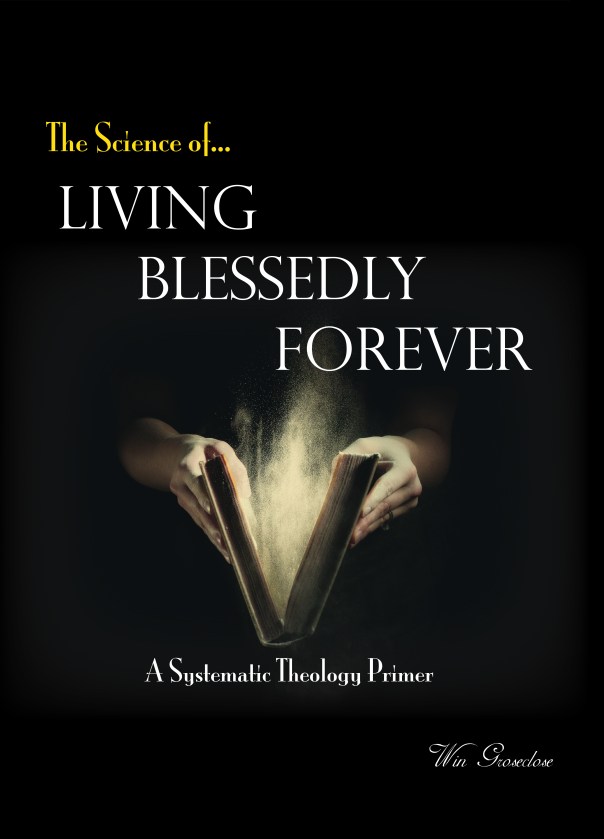
Note, that I haven’t dropped off of the Map…at least not intentionally.
This summer I made the decision that instead of writing new material, I would focus on putting some old material into a format so that it would be ready for publication. I am not sure that my decision was entirely the best idea, but nonetheless, that was the call that I made and I am still plodding through some materials that I began and are hanging over my head like a lead weight…I like to finish that which I begin. So, be patient with me and more writing will soon grace these pages. For those who have sent comments, be patient too, I am not ignoring you and have not forgotten your thoughts.
On a more positive note, I have gotten one of my projects into print… The book is entitled, God’s Glory — Man’s is Dust: An Introduction to Reformed Theology.
This book is essentially a revisiting of a series of lectures that I used to give in Ukraine to new seminary students. The goal is both an understanding of the Calvinistic TULIP and the origins of the Calvinistic/Pelagian, Semi-Pelagian, Arminian, Neo-Arminian, Wesleyan debate. Yet, in approaching it for publication, I designed this for those sitting in the pews under reformed preaching. It is not overly technical, but hopefully deep enough that I won’t insult your intelligence and may even present some aspects in a way you might not have considered. This is meant to be the first in a series of theological books aimed at those in the pews.
That said, if you are interested, it can be found either at Amazon or at Lulu.

Trees…
“The righteous are like a sprouting date-palm tree;
Like the cedars of Lebanon they grow large.”
(Psalm 92:13 [verse 12 in English])
The psalmist gives us a picture of two trees and parallels that with one who seeks to live a righteous life (or a congregation that does so). The palm, or a better translation would be the date-palm, along with the cedar were trees that were prized in the ancient world. Both grow quickly and had a variety of uses. The date-palm was perhaps best known for the abundance of fruit that it would provide to the people. Dates were a staple food and in some regions in the middle east, the sap of date trees was also collected for syrup. Palm branches formed a significant resource for weaving baskets and other practical items, and the wood of the date, though not suitable for large-scale construction, was still useful for smaller buildings as well as for burning.
While the wood of the date may not have been suitable for large-scale construction, the wood of the cedar was. These trees would grow to be well over 100 feet tall with trunks as much as 8 feet in diameter at the base. These huge trees grew especially quickly and plentifully in the region of Lebanon and thus their fame even today. In addition to buildings, their wood was also used to construct naval and merchant ships and was a significant building material used in the construction of the Temple in Solomon’s day.
Thus, the psalmist has the strengths of both of these trees in mind when he thinks on the character of the righteous…the church that follows after God. Their growth and maturity should be measurable and the fruit they bear useful for the community. In fact, every aspect about the church should be found to be useful for the work of God. The church itself should be a useful resource to the community and highly adaptable to changes in the world around them. Such is the church that worships God faithfully in Word and in Spirit. Such is a church that is focused on Christ and not on themselves.
Sadly, many churches do not reflect this characteristic as many individual Christians do not as well. How we should all be learning and growing in our understanding and application of Scripture. If this is not happening, something is askew. How our congregations ought to be growing deeper in the Word of God, which also ought to cause others to become curious and thus over time, the congregation grow broader.
The Wall Goes Up!
“My eye has been made to see my wall being raised up;
Before me is the one who does evil;
My ear hears.”
(Psalm 92:12 [verse 11 in English])
A short survey of English Bible translations will give a vast variety of interpretations of this verse, thus it ought not be surprising that the one I offer above is again rather distinct from some of the others. In fact, about the only thing that each translation can be said to have in common is that it speaks of the eye seeing and the ear hearing something, though that something is debated by translators.
The text literally speaks of seeing “my wall” being raised up. The Hebrew word used there is r…wv (shur), which typically refers to a small wall that might be placed around a well or a fence that might be laid between two people’s property. In context, it seems that God is giving the psalmist the confidence to say that though the enemy is on my borders, I shall not fear because even now I see God erecting a wall to protect me and to protect this covenantal land that God has entrusted to my family.
If we translate the verse in this fashion, then rather than it speaking of the destruction of the psalmist’s enemies, its focus is really on the defense of the psalmist from his enemies…something that lends itself better to the following verses. Remember too, this is a Sabbath psalm, and as such, this is that which the assembled congregation would be singing as they implore God’s protection from the foes all around them.
The notion of the ear hearing things is not so much a notion of the psalmist hearing perhaps the clamor of the enemies outside of the walls, but instead it is covenantal language that speaks of the design of God: “He who has ears, let him hear” is a common Biblical phrase to say, “Listen to the design and wisdom of God.” In other words, while the enemy is before you, listen to God’s plan to preserve you healthy and strong from the onslaught of the wicked…for (as the following verses speak) it will be you who bear fruit in old age.
Thus it is a reminder to us to be confident and sure that God is in the business of strengthening and walling in his own to preserve them from the evil one. And indeed, God is still in the business of preserving his own today which ought not only to give us confidence in doing his work in this world, but it should also drive us to praise for he has done this for us.
An Offering of Praise
“You have raised up my horn like a tower;
I poured out as with fragrant oil.”
(Psalm 92:11 [verse 10 in English])
This verse is a little awkward to translate and as such, there are various renderings in our various English Bibles. To understand this verse, though, you need to break it down a bit and understand some of the key terms. The first word is that of the horn, or in Hebrew, N®rRq (qeren). This can refer to a simple ram’s horn or a vessel in which oil is contained, but when used metaphorically, it typically refers to strength or that which holds the oil that spiritually strengthens the believer.
Connecting the horn to the oil is fairly obvious given the second line of the verse, but we still have the word MEa√r (re’em), which I am rendering as “tower” though many of our translate as “wild ox.” The term itself is highly debated amongst scholarship, but many see the language of the horn in the verse as the guiding interpretive feature. And, on a level, such a rendering makes sense if we see the horn as a sign of power and the strong wild ram or ox on the mountain as a symbol of strength. Yet, such a translation does not seem to take into account the language of the oil later in the verse.
The term can also be rendered as the word “Tower,” a high place that also serves as a refuge for the believer to worship. Given the language of the raising up earlier in this verse, such a translation seems to make more sense, seeing also a tower as a sign of strength against one’s foes.
The next term in dispute is that of the pouring out. Many of our English translations render this phrase as “You have poured…” or “I have had oil poured…”. The problem with both of these renderings is that the verb in question, llb; (balal — to pour out) is in the first person singular in the Qal stem. That means that “I” must be the subject and the verb is active, not passive…thus dismissing both major translational option. Rightly translated, it is “I poured…”. Some would argue that in poetry one is given some degree of grammatical freedom, but granting free reign here just adds complexity to the meaning rather than presenting the simple meaning of what the text says.
So, what is this fragrant oil that is being poured out? Most of the translations (by rendering the verb as a passive or as a second person) presume that the psalmist is being anointed with the oil in question, yet that is not what the text states. Instead, the psalmist is pouring out his oil that has been lifted up to this tower — on this high place. Rightly understood, it seems better to understand this pouring out to be a kind of drink offering that is being made by the psalmist in honor of his God who has lifted him up and has protected him from his enemies. Again, remember the context of this psalm is worship, if we get too far from God being the subject of our affection and focus more on God’s affection toward us, we lose that spirit or tone of worship before our creator and sustainer.
Thus, may we too be quick to raise up an offering of praise to our God, both in public and in private worship. May he be glorified and honored in all that we do. Our strength comes from him, let us return that strength to him in offerings of praise.
Enemies shall Perish!
“For behold your enemies, Yahweh!
For behold your enemies shall perish!
All those who do iniquity shall be scattered!
(Psalm 92:10 [verse 9 in English])
Indeed, in the end, all of God’s enemies will be tossed into the lake of fire where they will be tormented forever…bringing an end to their torment of God’s own, their mocking of God’s name, and their flagrant sin and wickedness. In that end, all the enemies of God will know and intimately understand the finality of God’s wrath. And in that time, we will not weep. We will not mourn. We will not grieve. We will celebrate the victory of our Lord and the destruction of his enemies.
Yet, these words are not purely words that speak of the end times. Even in this life, God brings his hand of judgment upon the wicked and scatters them just as he scattered the wicked people who built the tower of Babel. For a season, from our perspective, they seem to prosper, but they are bereft of life and truth. They suffer their own sorrow and loneliness as they seek to find satisfaction in anything but the one who can bring satisfaction to their life. God even gives them over to their wickedness and allows them to become so mired in their wretchedness that they cannot see anything but their sin before their eyes. He robs them of satisfaction and he robs them of rest.
Beloved, we are all so often tempted to envy the wicked and their abundance. Do not be tricked into doing so. Their pleasure is fleeting and their satisfaction is empty. But in Christ, satisfaction is full and pleasure is eternal. Though we may suffer for a season, there is an eternal weight of glory before us that is beyond compare.
Yahweh is Lifted Up!
“But you are elevated eternally, Yahweh.”
(Psalm 92:9 [verse 8 in English])
God is lifted up! He reigns on high! There is no god like our God, he is the great Yahweh, who sets his throne in the heavens and makes the earth his footstool. Can we not praise him highly enough? Will we ever exhaust the praises that our God deserves even in the light of eternity? Never! Our God reigns and he does so from on high.
What is amazing, wonderful, and remarkable about our God is that he condescends to us in relationship. Yet, in light of this relationship, let us never lose sight of the total “other-ness” of our God. It is my concern that, in the emphasis on a personal and intimate relationship with God that we downplay his elevation…in other words, we treat him as casually as we might treat a friend or neighbor and thus forget who he is and the reverence that he rightfully deserves. Indeed, is it not the “Fear” of the Lord that brings knowledge and wisdom? Where there is no fear, will not foolishness multiply? Is that not the plight of the church in our age today?
In many circles, God is merely treated as one of many gods rather than the God above all others and in a class entirely of his own. To borrow from the Medieval theologian, Anselm, he is “The being greater than whom no other being can exist.” There is none like him and it ought to give us goosebumps to draw near to him while at the same time we do boldly draw near to the Holy One of Israel in our midst. What a glorious gift, but in our worship, let us be drawn up to him and not seek to draw him down to us.
So, friends, as you pray this day and in the day to come, may you be altogether aware that it is the God who is lifted up who has given you permission to come into his presence. Celebrate that, but do so with a holy fear as well, for in that fear you will find knowledge and wisdom.
Destroyed, Forever and Ever…
“The wicked sprout like weeds,
And all who do iniquity blossom;
To be destroyed, forever and ever.”
(Psalm 92:8 [verse 7 in English translations])
Paul writes in Romans 9:21-23 that God has created the wicked as vessels of wrath for the purpose of pouring out his power upon in destruction. The psalmist speaks in similar terms here. Though the wicked seem to sprout up like weeds all around us and those who revel in their sin seem to prosper, there is a purpose for which they were created…and that purpose is destruction. While the believer may be created, in the words of the Westminster Shorter Catechism, “to glorify God and to enjoy him forever,” the wicked are created to face His wrath and be destroyed forever.
For most of us, that is a fearful warning, for though we may be believers we know many who are not. Indeed, some may be destined for this destruction. Others may be of the elect of God, yet in God’s providence they have yet to come to a saving knowledge of Jesus Christ. The question is, might you be the one whom God will use to share the Gospel with such persons? Yet, such cannot take place unless you begin the conversation with them about what is true and what is eternal. The grass withers and perishes but the word of the Lord lasts forever. Will you be the one to share that word with those in your midst? Will there never be left any question as to your care for their eternal souls?
All too often we read passages like this and we fail to seriously consider the reality of hell and the horrors of such eternal destruction. The scriptures refer to it as the “second death” (Revelation 2:11; 20:14; 21:8). A dying that lasts eternally in all its fearful connotations, devoid of hope. Such is the end to which those this verse speaks of are destined…should it not make us shudder that we have friends, neighbors, and coworkers that will be found under God’s thumb of wrath. Will you warn them of the coming wrath?
Ignorant and Stupid
“The man who is stupid does not know;
The ignorant one does not understand this.”
(Psalm 92:7)
The language of one who is stupid and ignorant is used in a very specific way in the Bible. Today, we often refer to people who are uneducated as ignorant and use the term “stupid” as more of an insult. We might cruelly comment, “What are you stupid or something,” if someone just does not understand a basic idea.
But the Bible prefers to reserve these terms for a very specific class of people: those who pursue idols. It is the stupid man who bows down to idols of silver or of wood or who crafts such abominations for sale amongst the people. Those who are ignorant are ignorant in practical aspects of living — they cannot make the kind of decisions that will be wise for them or for their families. And since the fear of the Lord is the most basic decision we can make that leads to knowledge and wisdom, those who reject such fear reject that which will allow them to make wise decisions and live life well.
And thus, those who pursue idols or the illusion of atheism do not understand this. But what is the “this” in question? It is the strength of God and his mighty works. They don’t understand the basis for worship. For them, coming to church is either habit or foolishness, they don’t see it as an engaging with the God of the universe who rules over all things.
The condemnation, then, is there, for there are many in our communities and even in our churches that are stupid and ignorant because of their attitude toward God and life. And one need not be conscientiously an idol worshipper or atheist to fall into this category; many do so by their actions. So, beloved, the question is first, will we look at our own lives and honestly ask ourselves whether we are guilty of such things? And then, will we address those areas in a way that honors our God? In addition, will we then share what we do know about the power of God with those who are ignorant and stupid in our midst, pointing them to the God who claims our allegiance, our worship, and our obedience in every area of our lives…not just in what we do in church.
Oh How Deep!
“How your works are great, Yahweh,
Your plans are quite mysterious.”
(Psalm 92:6 [verse 5 in English])
Oh, heavenly Father, “what is man that you are mindful of him!” We make plans and perceive our designs to be deep and meaningful, but in a moment they are washed away by the winds of time. How we plan for tomorrow yet have no control over today. How we ponder our designs while neglecting the design that you have revealed in your word. Oh, how foolish are we puny men, yet you have condescended to reveal yourself to us in fearful and wonderful ways. Amen!
As great and mighty as God’s works are, his decrees and plans run deeper. We may spend a lifetime plummeting the depths of that which he has revealed in his Word to us, yet will never scratch much more than the surface. Oh, were we given a thousand generations to dig into the word, we still would not come closer to reaching the bottom of the richness of God’s revealed Word.
Thus, they are a mystery to us, but not the kind of mystery that discourages or disheartens, but the kind of mystery that draws us in, that sparks our interest and curiosity, and that envelops us in the love and truth of this mighty God.
Oh, the depths of the riches and of the wisdom and of the knowledge of God! How unfathomable are his decrees and incomprehensible are his ways! For who is he who knows the mind of the Lord? Who is he that has become his counselor? Who is he that first gave to him that he might receive repayment? For out of him and through him and for him are all things.
For to him is the glory unto eternity, amen!
(Romans 11:33-36)
Rejoicing in Yahweh’s Divine Actions
“For you make me rejoice constantly, Yahweh, in your divine action; in the works of your hands, I continually exult.”
(Psalm 92:5 [verse 4 in English])
The question that we must raise is whether or not we can really say, with the psalmist that we rejoice and exult in the works of God. On the surface level, our first response is probably to say that we do rejoice in God’s works, but in saying that we need to take a closer look at what we are suggesting. Indeed, it is easy to rejoice in the blessings that God brings into our lives, but what of the trials? What of those times when everything is falling apart and we just cannot figure out which end is up in life? Is it not harder to rejoice in God and exult in his works when such things take place? Yet this, too, is in sight of what the Psalmist is saying.
Sometimes the hardest thing to do, when things fall apart in our lives, is to praise God in the midst of such things. Yet, in times of distress like this, such is what our soul most needs. We need that communion and worship and we need to affirm that God’s work is continually a good thing in my life because it is used to conform me into the image of his Son, Jesus.
One of the great reminders of this principle is the setting aside of the Sabbath day. A day where we join with the body of Christ and worship together — where we even lift one another up in worship, standing in the gap for the brother and sister who is broken and cannot stand (spiritually) on their own feet to do so. That joined with the promise that if we count the Sabbath a delight, God will raise us up from our depths and give us a taste of his glory (Isaiah 58:13-14).
 The Preacher's Study