
The Culture War: Win, Lose, or Rebuild?
In the battle of Gibeah (recorded in Judges 20), the armies of Israel drew the defenders of Gibeah out toward the highways and away from the city by a feigned retreat. As Israel fell back, appearing to route, the heart of Israel’s army lay in ambush around the city, thus defeating the city while the city’s defenders were chasing after a decoy.
As I meditate on what is typically called the culture war, lately it has been occurring to me that we (the conservative evangelical church) may be acting a lot like the defenders of Gibeah. As we look around us at the broader culture, it is clear that the church has been losing influence. In many segments of society, the voice of the church has been relegated to the irrelevant and thus we find ourselves speaking only to ourselves and thus not influencing the culture around us as salt of the earth and light of the world.
Maybe we have been duped — duped into thinking that we are still fighting a legitimate war and as we pour out all our resources and energies against our perceived enemy, they have been gladly giving ground because they are nothing more than a distraction and the real battle has already been lost.
LOST?
Before you get all angry and storm off, just hear me out because I am not a defeatist — in fact, if anything, I usually am called a “triumphalist” by people who don’t like what I am saying. Just bear with me for a moment.
What if we have been duped? What if the culture war was something that was lost a generation ago when people began allowing prayer and Bible instruction to be taken out of our schools? What if the culture ware was lost when evolution and situational ethics began to be accepted as the norm instead of a divine creation and absolute morality? What if the church’s acceptance of “Tax-Exempt” status (as if the Government ever had the right to tax a Church) upon the promise that the church would not play an active role in politics was the point where we lost the war? What if the cultural belief that “religion is a private matter” is where we lost the war? What if we have been fighting decoys while the enemy lay in siege and infiltrated our congregations and our homes, leading the next generation to stray from the church? What if the creation of the “Christian sub-culture” has been nothing more than a colossal failure whereby we have removed our own influence from the wider world? What if we are doing nothing more than fighting ghosts that don’t need to win because the real war has already been won? What if?
MAYBE?
Do I have your attention? Just maybe? If we have lost the war, then that changes the whole paradigm and approach, doesn’t it? It has been said by many, the world around us today is more like the world of Paul’s day than the world of Luther’s day. If so, how do we react? How do we think differently?
What if the change in paradigm means no longer fighting a culture war that has been lost but instead, consists of building a new culture. No, not a sub-culture like we see around us today — that has not proven compelling (sorry, folks, my intent is not to hurt feelings). What if we let go of the whole Christian sub-culture thing and began really competing on the same footing and level as secular artists, writers, musicians, and dramatists? No, not in a preachy way, but what if the most compelling stories, music, books, ideas, etc… came from people who happened to be Christian and their Christian worldview informed what they produced (but was not what they produced). What if the best book, work, video, etc… in every field just happened to be produced by a Christian whose worldview was again, below the surface, informing what was thought.
What if, by building a new culture that was more compelling than the old culture happened to be (even to the non-Christian), was our tactic and approach. What if we realized that this is also not a new idea, but that others, like C.S. Lewis, were arguing for this kind of approach nearly 60 years ago — yes, when many of those things I mentioned at the beginning were lost! What if we approached this world as builders…though not unlike the builders of Nehemiah’s day, with spears in one hand while work was being done by the other. We need to defend agains the attacks that the enemy will really bring when they realize that we realize that their feigned retreat was a ruse. Something to think about…
Canaanites Remaining in the Land…Will We?
“Manasseh did not drive out the House of Shean and its villages, or Taanak and its villages, or those who dwell in Dor and its villages or those who dwell in Ibleam and its villages, or the inhabitants of Megiddo and its villages, for the intention of the Canaanites was to dwell in that land. When it came to pass that Israel grew strong, they put the Canaanites to forced labor but they did not disposes them entirely.”
(Judges 1:27-28)
And now one after the other, we find regions that did not entirely fall to the Israelites. The phrase that we find repeatedly, such and such a city “and its villages” literally reads, “and its daughters.” This is a figure of speech that reminds us that in the ancient times you would find that once a city was established, smaller villages would spring up around the main city. This provided both trade and protection for those living outside of the city walls — thus these villages could almost be seen as daughters of the main city.
Two things strike me as interesting as we enter into this string of partial victories. The first is that we often take for granted that the Canaanites would just be pushed out of the land. Yet these tribes and villages had been there for generations…many of them even before Abraham arrived in that region. As a result, they intended to fight for their land. God had given Israel the land, indeed, but they would need to take it from those who dwelt there and they would have to take it by force.
The second thing that strikes me about this passage is that the author points forward to the time when Israel would be established in the land and they would put these Canaanites to forced labor. Not only were the Canaanites unwilling to leave as the Israelites moved in their direction, the Canaanites were unwilling to leave even if it meant becoming slaves in the land that they still considered their own.
Somewhere we need to make the decision as to where the line is drawn when it comes to the land. In our more modern day, we celebrate the Pilgrims who traveled to America for religious freedom. Yet, the fact that they came here means that they left behind their land in the Old World to find new land here. For many of these Pilgrims, their faith meant not only were they persecuted in England, but had they stayed, they would have in essence become a servant to those around them (at least in religious matters). For many of them, that meant leaving for the hardships of the new world was the only reasonable option.
Here in modern America, though, I wonder sometimes whether there will come a time when we will have to make that decision ourselves. As America grows increasingly liberal and paganistic, to we remain and continue to be salt and light or do we immigrate to a place, perhaps like Africa, where we will be able to worship more freely? My prayer is that we don’t come to the point where we will have to make such a decision, the question we must ask ourselves, though, is when such a decision needs to be made and at what point do we act upon it. Again, let us pray that this is not a decision we will be forced to make.
Apologetics and the Relocation of Luz
“And the man went to the land of the Hittites; and he built a city and he called its name Luz. It is named that up to this day.”
(Judges 1:26)
This phrase, “up to this day,” is found 90 times in the Hebrew Scriptures and in the majority of cases, the phrase is used to communicate the idea that even as this text is being written, years after the actual events, the city or location is still known to the audience of the author’s day. Why is this important? It serves two purposes. First, it gives younger members of the community the background behind the cultural tensions between Israel and their surrounding neighbors. And yes, the Hittites would become an ongoing enemy of the Israelites. Though the empire itself began to collapse in the 12th century B.C. (toward the end of the time of the Judges), there were regional groups (sometimes called “Neo-Hittites”) who still caused Israel a great deal of grief even into the time of the Kings. Most scholars today place the relocated Luz just north of the Golan Heights in the region that would have (at the time) been part of the Hittite empire.
While the first reason spoke to the people of the author’s day, the second reason for the significance of this phrase speaks to us in modern times. Were this a mythological or legendary story, as many liberals would assert, historical place-names would not be mentioned. Think about the folk-stories that you know: Cinderella, Hansel and Gretel, Jack and the Beanstalk, or even King Arthur. These stories are all very vague in terms of times and place names…the reason: so that they cannot be disproven.
But the Bible gives numerous place names and ties the historical events therein to many events that are outside of the region of Israel (in this case, to the Hittite Empire). That gives us a way to verify their historicity but it also stands as an apologetic to the world around who would be inclined to dismiss the text as ahistorical. Thus, as we make an apologetic for the Christian faith and for the truth of the Bible, we need to recognize that these statements were intentionally put in place for our benefit. The author is essentially saying to us, “Look, I too am separated in time from these events, but the cities and places still exist today and thus my audience can go there and verify them firsthand.” While it may be a bit tougher for us to verify these things firsthand as more history has transpired and ruins of these cities don’t always still remain, the historical record stands as a witness to us that these events were not manufactured. That should encourage us in our faith as well as be a tool in our apologetic for the faith. The bottom line is that our Bible is reliable and statements like this reinforce that great truth.
Spiritual Leadership in the Home
“So he showed them the entrance to the city and they struck it with the edge of the sword. Yet the man and his extended family, they sent away.”
(Judges 1:25)
Having been given the covenantal promise of protection, the man revealed to the house of Joseph where the hidden entrance to the city was and the soldiers gained entrance. Once inside they put the city to the edge of the sword (literally, to “the mouth of the sword”). Much as we discussed above, with MårDj (charam — see verse 17), this language speaks of devoting to death everything living within the city. And, as we noted above, this only makes sense in light of a surprise attack upon the city and a surprise attack only makes sense if we understand the entrance to be a secondary, unguarded entrance of which only the inhabitants of the city knew.
In putting the city to the sword, they do provide safe passage for the man who betrayed Luz to the sons of Joseph…but not just to him alone. We discover here that it is his entire, extended family that is delivered. The Hebrew term for “family” that is found here is hDjDÚpVvIm (mishpachah), which refers not only to one’s immediate family, but also to one’s extended family as well — one could translate this even as “clan.” In the historical reading of the text, this only makes sense as the man moves the region of the Hittites (to the north) and establishes a city — a task that would have been all but impossible either alone or with just one’s immediate family. Yet, with an extended family, the result seems far more plausible.
While this deliverance is a reminder of the deliverance of Rahab and her family when Jericho fell, it is also a reminder of the principle of covenant headship. As the head of his family (and clearly, of his extended family), he has the right and privilege of negotiating on behalf of his family as a whole. The family suffers with him in failure but the whole family benefits when he does what is right.
What is fascinating is the change of direction that God providentially seems to give this man, for this account is not just about the deliverance of an individual, but of a family. The city has fortified itself as it soon will be under siege and this man sneaks out with no indication that any of his family is with him. Of course, we don’t know the motivation for this — perhaps he was seeing if this was a safe way to exit the city and would then go back for his family. At the same time, there is nothing to indicate he was trying to save anyone’s skin but his own. If this latter case is true, through his capture by the sons of Joseph and his betrayal of the city, not only was his family delivered…but he was delivered from his own sin of not caring for his family.
One of the plagues on the culture in the west is how often men seem to abdicate their responsibility and their role in their family. Many desert their children, leaving them to be raised by their mothers alone. Many choose to spend their money on themselves rather than sacrificing to provide for a family. But even when men do not desert their financial responsibilities to their families, they sadly abdicate their spiritual responsibility to lead their homes, once again, laying that burden on their wives.
Men, we have a covenant responsibility to lead our households in spiritual things. We must be the primary teachers of our family when it comes to the Bible, to theology, to spiritual living, and to covenant faithfulness. We teach in our actions, we teach in our lifestyle, but we also need to teach intentionally by opening up the Bible, reading it to our families, and instructing them in its meaning and application. And it also includes praying for and with our families as well as teaching them to pray. But how do you teach what you do not know? We must strive to be the “experts in our home” as we are the masters of our homes. That’s the heart of being a spiritual head. The question for those men who are reading this is will you? The question for those ladies who are reading this is, will you encourage your husbands to do so?
Pilgrim’s Progress Revisited: Michael and Hope

Last year in our Bible Club at church (our K-4th grade midweek Bible Program), we were tackling the Biblical theme of the Armor of God from Ephesians 6. Wanting to try something new, I decided to tell the kids a story. So, every other Wednesday, I wrote for the kids and then that evening sat down with them and told them the story of Michael and Hope.
For many of us in Reformed circles, John Bunyan’s classic novel, The Pilgrim’s Progress, holds a special place in our hearts. It is a story that I wasn’t introduced to until later in life, but it is one that my children have both read (several times, actually!) and been influenced by. In fact, I remember the excitement on my son’s face when he came home from school one day and told us about this book they were reading in class.
Bunyan left open the idea that there were other pilgrims along the road to the Celestial City. So, rather than trying to retell the story of Christian and Christiana, I set forth to write a new story (in the spirit of the old) of two more pilgrims on the road: Michael and Hope who would be joined by others in their adventures.
What humbled me during the process was just how responsive the children were to the story. They looked forward to new installments with anticipation and could tell me what happened in previous chapters even though sometimes we read the chapters weeks apart. Their excitement birthed the idea to perhaps share this story with a wider audience.
While originally written as a story to be read out loud, it has been thoroughly edited and tweaked to be able to stand as a novel on its own. It has also been wonderfully illustrated by a local artist, Tessa Sentell, who used her gifts to bring Michael and Hope to life along with Prudence and others they meet on the road. We aimed the novel format toward readers ages 8-12, but my experience with our Bible Club kids and volunteers is that the story is one that will be enjoyed by readers of all ages.
Middle Tree Press has chosen to publish the book. It can be found either on Amazon or on their website. If you go to Middle Tree Press’ website, they are offering a 10% discount if you type in the code: MichaelHope10.
I hope you like it. Middle Tree Press has also set up a blog window for us to continue the conversation about the book and the themes that the book develops. Sign up for updates from Middle Tree and you will be able to follow along and interact with these discussions.
Blessings, Win
On Amazon, click here
On Middle Tree Press, click here
Chariots of Iron
“And Judah overthrew Azzah with its territory and Ashqelon and its territory, even Eqron and its territory. And Yahweh was with Judah and he took possession of the mountainous region. He could not take possession of the dwellings of the plains for they had chariots of iron.”
(Judges 1:18-19)
The note about chariots of iron is actually tremendously helpful when it comes to confirming the dating of these historical events recorded in Joshua and Judges. As scholars and archaeologists examine the development of civilizations, they typically date the beginning of the Iron Age around 1200 or 1300 BC. Obviously there is not a hard and fixed date as cultural changes in terms of the usage of metals for tools and warfare, these changes are gradual, but in the 13th century B.C. studies have shown the increased use of iron instead of bronze.
At the same time, most conservative Biblical scholars place the conquest of Canaan between 1375 or 1350 BC. This would mean that these Canaanites of the plains were a bit ahead of their time in building iron chariots, but it would also explain why Judah and Simeon had such difficulty when seeking to conquer these peoples. This was a radical development and weapons of bronze were simply no match for weapons of iron and such was the plight for the armies of Judah as they engaged the peoples of the plains. But for those who doubt the historicity of the Scriptures, this is just one of numerous reminders that the Biblical account is quite consistent with the discoveries in the world around the ancient near east.
This, though, marks the first of the inhabitants of the land that the armies of Israel were unable to drive out — the first of many. Those people in the land would cause great grief for the people in the long run, but we get ahead of ourselves.
A Friend of God…now available through Createspace and Amazon…
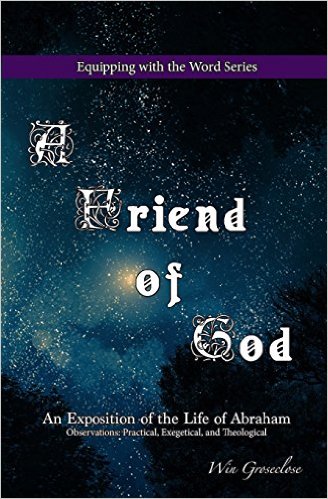
For those who have enjoyed reading my blog posts on the life of Abraham (Genesis 11:10-25:10), they are available all in one place… w.
Debir — the City of Books
“And they went from there against those who dwelt in Debiyr — the name of Debiyr was Qiryath-Sepher.”
Names fascinate me. Qiryath-Sepher (or Kiriath-Sepher as many Bibles transliterate) literally means, “The City of the Book” or “The City of Writings.” The Greek translation of this city is Po/liß Gramma/ton (Polis Grammaton) — “The City of Letters (Epistles).” Later, then, this city’s name is changed to Debiyr (Debir in most modern transliterations), which most likely is derived from the Hebrew word, rAb∂d (dabar — meaning, “word”), though ryIb∂d (Dabiyr) is also used to refer to a holy sanctuary — see 1 Kings 6:5, 8:6, Psalm 28:2, 2 Chronicles 5:7 to see the term applied to the Holy of Holies in the Temple.
What adds to the interest is that many digs have been done in the area presuming (by its name) that it would contain a library of sorts — a treasure trove for scholarly research. Such a trove has yet to be found. William Albright, one of the founders of the modern Biblical Archaeology movement, thought that he found Debiyr — a dig that is today referred to as Tell Beit Mirsim. Yet no library was found, though there is evidence of an active weaving industry — potentially a place of trade for travelers. Albright’s view about the location of Debiyr is challenged by some, but archaeology is a constantly changing discipline.
If, though, Debiyr is a reference to a holy place — a monastery of sorts perhaps located there in ancient times — it is perhaps feasible to identify the city not so much as a library of academic pursuits, but a place where various monks (likely pagan) would come to pray — a place where the scrolls were written, not kept. Yet, all this is speculation — how did this city get its name? We just do not know.
He will Continually Lead Us
“For this is God — our God — forever and ever;
He will continually lead us until death.”
(Psalm 48:15 {verse 14 in English})
For indeed, this mighty and protective God is our God…and he will be our God forever and ever. We need not fear that he will leave or forsake us and we need not fear that he will give us over to the enemy forever. He is our God forever. And what does that look like in a practical way? He will lead us until we die. While indeed he will hold us even until eternity, it is while we are here on this earth that we need God’s shepherding hand so powerfully to lead and to guide us through this world that is so filled with trial and temptations. And indeed, God will be that leader to guide our steps. Jesus himself uses the language that he is the Good Shepherd.
Yet, as we close this psalm with this promise, let us ask ourselves, are we obedient in following the Master’s lead? Or, do we simply pay lip-service to our guide and go in the direction that our preferences would take us? All too often it is the latter and not the former. All too often, professing Christians don’t even know the Scriptures well enough to recognize the direction that God sets before them in life. All too often the Bible is twisted or at best, picked through, and used to justify our preferences rather than to subdue our wills. May, we indeed be faithful sheep following our Good Shepherd…and to do that we begin with knowing his Word.
The Last Generation
“Going around Zion, encircle her,
counting her towers,
You will establish your heart — the ramparts through her palace.
You shall continually write this for the sake of the last generation.”
(Psalm 48:13-14 {verses 12-13 in English})
So the singing is continued (previous verse) and while singing those who are in Jerusalem are to encircle her in songs of praise to our God…filling the air with the sound of their worship. They are to count and number her towers and examine the ramparts (defensive walls built around the city), and establish their heart. Now this phrase (the establishment of the heart) may sound a little awkward to our western ears, but it is a figure of speech that implies that we are to pay close attention to something even to the extent of placing our affections on that something, whatever it may be.
Yet, why would the psalmist command that the people of God place the fortifications of Jerusalem on their heart? The answer seems to be two-fold. First, as we have discussed previously, the focus of this psalm is not so much on the physical, earthly Jerusalem, but on the eternal city of God — the New Jerusalem — that is being kept preserved in heaven until the return of our Lord (1 Peter 1:4-5). The Jerusalem here that is in the experience of the psalmist is but a shadow of what is to come…and with the coming of the New Jerusalem comes the new creation where God and man will once again dwell without separation. There is indeed a reason to set your heart on such things.
The next verse, though, also gives us a clue as to what the psalmist has in mind. He says to the people that not only are they to observe Jerusalem, they are to write down those observations for the sake of the “last generation.” Most of our Bibles seem to translate the term, NOwr≈jAa (acharon) as “next” or “future,” implying that this writing is for those who will follow in the future. Yet, if this writing is simply for future generations through time, then we might expect that the term rOw;d (dor — “generation”) would be plural, not singular. Thus, we should recognize that NOwr≈jAa (acharon) can also refer to the last of something — “the last generation.” Yet, who will be the last generation for whom these people are writing? I would suggest that these writings are to benefit the last generation to see Jerusalem and the Temple standing proud — to remind the last generation what would be lost when the Babylonians were brought in by God to punish the people for their perpetual sin — to remind people of the glory they exchanged for the lusts of their flesh and for the pride of their hearts. Oh, how far we fall when we take our eyes off of God and rest them on ourselves.
We are long past the last generation to see the temple. Even those who rebuilt the Temple realized that the second-temple was a far cry from the glory of the first and from the promised restored glory. Jesus is the greater temple and the temple that Ezekiel anticipates is yet to come. All things revolve around Christ and the Temple and all of its former glory are meant solely to point toward our Lord and Master, Jesus Christ. It is his glory, not ours, of which we write.
Rejoice!
“Let Mount Zion rejoice!
Let the daughters of Judah shout in exultation!
Because of your judgments.”
(Psalm 48:12 {verse 11 in English})
What a contrast that we find here between the celebration of the daughters of Judah and the lamentation that Jesus speaks of in Luke 23:28 as he is being led up the hills of Golgatha. The language of the Daughters (whether Judah or Jerusalem) is figurative language that speaks of the women of the culture (who often bear the grief of the judgment on society as they lose their sons to war. Thus, they shout and sing in celebration in the promise of God’s protection from the wicked and while they should have shouted for joy in the Triumphal Entry of the Messiah into Jerusalem, on the day of his crucifixion he calls them to weep for the wrath of God will soon fall on this city (70 AD) for they executed their king.
For now, though, they are called to rejoice and shout in exultation and by extension, so are we. Yet, how often we do not. We get distracted by the minor struggles of life and miss the greater blessing and cause to praise of our mighty God. How easily we are duped by such things. How often we complain to God when we should be rejoicing before him. How often we worry instead of trusting his protection. Loved ones, our God on high has given us protection and covering; sing and celebrate the great gift he has afforded us at the cost of his Son’s blood.
Praise to the Ends of the Earth
“Like your name, O God,
So your song of praise goes to the ends of the earth;
Righteousness fills your right hand.”
(Psalm 48:11 {verse 10 in English})
There is no other name under heaven that a person may be saved apart from that of Jesus Christ the Lord. He is God and his name extends to the ends of all the earth. It is not just a name for those in particular localities, but the Gospel is for Jew and Gentile alike, slave and free, barbarian and civilized, male and female. Indeed, the name of God goes out to the ends of the earth through the Gospel of Jesus.
At the same time, there are still many places and people groups where the song of God’s praise is not known and has yet to be taken. It is a reminder to us that the work of evangelism is not yet complete. Even so, it is not just people group in far remote places that are in need of the Gospel…it is groups of people within our own culture. Indeed, we need to support our missionaries to far away places, but how we need to evangelize our own communities, neighborhoods, and towns. How often we fall into the trap of thinking that missions work is just for those who go somewhere else and learn a new language to evangelize. Loved ones, it is work to which we have been called and it is work that is even within our backyard, lest we neglect training up our own families to call our God blessed. May indeed the name of Jesus extend to all the earth, but may we be the ones who take that name near and far to the praise of our almighty King.
Pondering Steadfast Love
“We have pondered, O God, your steadfast love;
in the inward parts of your temple.”
(Psalm 48:10 {verse 9 in English})
On the value of pondering the covenant faithfulness of God! How rarely we give ourselves to that practice in an adequate way. In today’s world, it seems that we rarely ponder much of anything but are instead satisfied with sound bytes and five-second blurbs. Such is the plight of our world today.
The steadfast love of God — his dRsRj (chesed) — reflects the consistent faithfulness of God to his people despite his people’s covenant unfaithfulness. Ultimately, God is always faithful and we so regularly and consistently fall short. Further, we often turn away from the faithfulness of God so that we can pursue specific sin in one form or another. Yet, God remains faithful to his elect and the blessings of being connected to that faithfulness of God are impossible to contain with words. Hence, we meditate upon them — pondering God’s faithfulness.
It is my conviction, also, that a clear remembrance of God’s unwarranted faithfulness is the antidote to human pride. We fall short and have consistently fallen short; yet, God never falls short — he always remains faithful to his own. The bride of Christ will indeed be made ready. And just as the bride does not prepare herself, but is prepared, for the wedding day, God prepares the elect church for his Son, Jesus. Loved ones, ponder these things for they will help prepare you for a life of faithfulness.
Crashing the Ships
“With the wind from the east you smashed to splinters the trading vessels of Tarshish.”
(Psalm 48:8 {verse 7 in English})
It is tempting to see this verse as a reference to 1 Kings 22:48, where the ships of Tarshish that King Jehoshaphat had working with him. Remember how King Solomon had built a navy with the help of Hiram, King of Tyre, and then later the navy project was scrapped as a result of a storm which wrecked all of the ships. Yet King Jehoshaphat reigned from about 840-860 BC, long after the Sons of Korah would have been writing.
Thus, if dated late, this psalm could be speaking of this specific event, but I think that the Psalmist has something even greater in mind. In context the language of this psalms is speaking of the greatness of God and of his might against those who stand against him or who stand against his people. Even before the Temple was built, the ships of Tarshish, connected with the naval people of Tyre, were recognized as a major naval power (hence the fact that Solomon worked with Hiram to build the navy). If we understand the verse in this manner, then what it is communicating is that God is the one who is capable of destroying even the major powers of the world — even Tarshish and their mighty navy that sails the dark, chaotic seas. Not only do the armies of the enemy tremble when facing the Almighty God, but so do the navies.
God is the mighty one, the glory of his people. And we stand before Him in awe and grace and thanksgiving that he has drawn us to himself and has protected us from the armies of the world. Indeed, there will come a time of eternal judgment for the wicked but even in the world today, the forces of this world, both natural and national, are at the Lord’s disposal for use, discipline, but also for destruction to show his power. We who know this God often take his presence for granted…all the while we often come into his presence with way too little reverence. Loved ones, may we rejoice in that we come into the care and presence of the mighty God of the universe who will protect us under the shadow of his wings; but let us also do so with the awesome reverence for who he is and for the might he shows and has shown in the world.
Agony
“Trembling seized them;
labor pains like giving birth.”
(Psalm 48:7 {verse 6 in English})
In our society today, how rarely we take seriously the idea of being under God’s judgment. We make jokes about it, there are movies that celebrate it, and people write books suggesting that if anything, Hell would be more fun than heaven. Yet, beloved, how evil such sentiments are and how deceived we have allowed ourselves to be in these matters.
The Bible paints another picture for us — that of being struck with fear and trembling at the notion of God’s wrath. Here the psalmist speaks of the trembling of abject terror seizing ahold of him so much so that he cannot move and then the torment that comes from facing the wrath of God being like that of a woman in labor, giving birth…and the psalmist is actually just getting started.
Loved ones, take these words seriously for God’s wrath is against his enemies…all of them. Do not envy the wicked, for while their revelries may seem to fill their days with laughter, those days are fleeting and the end result is suffering greater than our human imagination is capable of relating. The psalmist here is paralleling the experience of the enemies of God in history to what is to come so that we turn from our wickedness and repent of our ways, pursuing the God of glory rather than the glory of the flesh. May indeed all of us heed his warning.
The Fright of the Condemned
“For behold, the kings gathered together
and they passed by it together.
They saw it and thus were terrified;
They were horrified and ran away in haste.”
(Psalm 48: 5-6 {verses 4-5 in English})
It does not take much reflection to recognize just how often it plays out in history that the nations have waged war against God’s people. From the Exodus forward nations have attacked from all corners … Egypt from the south, Philistia from the west, Babylon from the East, and Persia from the north are just a few to get started. And apart from the times when the hand of the Lord was against his people in discipline, God was faithful as the Warrior of Israel…our rOw;b…Ig lEa (El Gibor — “the Heroic God” — Isaiah 9:6). He is our defender in times of trouble (Isaiah 33:2).
The language of God defending his people is common enough, but have you ever reflected on what it must have been like to be on the receiving end of God’s wrath in these cases? Have you ever wondered what it must have been like for the Egyptians to fact the dark side of the glory cloud, which defended Israel while they waited for the Red Sea to part (Exodus 14:19-20) or perhaps on the next day, what it must have been like for those Egyptian charioteers upon whom the walls of the Red Sea collapsed. Think about what it must have been like when the confusion came upon the camp of the Midianites and they, in their confusion, attacked one another (Judges 7:22-23) or when Shamgar slew 600 Philistines with an ox-goad (Judges 3:31) or Samson slew 1000 with a donkey’s jawbone (Judges 15:15). Can you imagine what the night must have been like when the Angel of Yahweh went out and delivered his people by slaying 185,000 Assyrians in a single night?
The examples abound when we look back across history, but there yet lays ahead an example that is singular in significance and awe. For when Jesus returns again, he will call his people to himself but enter into final judgement against his enemies…the reprobate. There all of the nations of the earth will stand before our warrior God and taste the fullness of his wrath and for all eternity find themselves under judgment.
The kings are described as gathering together to pass by — to pass through — Israel…with the implication that they will be plundering the land on their way and yet they were terrified. The Hebrew word used here is hAmDt (tamah), which means to be horrified and frozen with fear, and indeed, this will describe (at the very least) those who will be under God’s wrath. How might we escape this wrath, you ask? Through the gate of Jesus and through Jesus alone. Turn from your sins, confess them to God, and seek Jesus in the faith that only God can give. Yet, let us be clear, serving God rather than self or mankind is not primarily about escaping wrath…it is first and foremost about giving God the honor and glory that he is due. Let us stand in awe of our God, not out of fear of impending destruction but because he is glorious and worthy of our praise and adoration.
The Fortified Palaces
“In her fortified palaces, God is made known to be a place of refuge.”
(Psalm 48:4 [verse 3 in English])
This the city of God…the palace that has been fortified and protected and situated on Zion, she is a place of refuge. While this was meant to be true in the most literal sense of the word — Jerusalem was walled in and protected — it is also clear from the context of this psalm that the sons of Korah have something even greater in mind. God himself is the ultimate place of refuge from those who will seek to destroy us, for indeed, “the sons of Korah did not die” (Numbers 26:11).
We have often reflected on the tendency of the believer to seek to find refuge in human works rather than in trusting God for refuge, but I wonder whether or not part of the problem is that the pattern of life and faith exhibited by the church as an institution in today’s era lends it to communicating that great truth. Allow me to explain. Jerusalem was a shadow of the greater Jerusalem that is to come just as the throne of God over the mercy seat was a shadow of the throne room in heaven. Similarly, Jerusalem was walled in — was referred to as the most fortified city in the Roman empire, though, again, these human walls were only meant to symbolize the greater truth that it was to God that we can run to find refuge.
Our churches, then, as shadows again of the worship in heaven and of the refuge of God’s presence (there is a reason we refer to the heart of the church as a “sanctuary”), what do they communicate? Do they communicate that God is a place of refuge or otherwise? And here I am not so much talking about the walls or the tower, etc…I am talking about the people. Is church a place to which people can fly when the winds of this life buffet them to and fro? Or, is your church a place where people need to hide their hurts lest someone seek to bring further injury. Sadly, I think that churches are often more the latter than the former…yet when that takes place, what are we communicating about the character of God? About his city? About his worship?
Loved ones, this is a principle that we must take very seriously, for what we do in this life and how we worship reflects what we truly believe about the character of God. If we believe that God truly forgives, then we must forgive. If we believe that God is a place of refuge, then our gatherings and gathering places also need to be places where people can find refuge from the ravages of this world. If we believe that God is love, then we must express that love to one another. And if we say that God is one way yet do not live it out, then we become hypocrites and our testimony will be rejected in our community and in this world.
In the Far North
“Fair of height is the joy of all the earth — Mount Zion in the far north;
the city of the great King.”
(Psalm 48:3 [verse 2 in English])
What does the psalmist mean when he speaks of Jerusalem as “in the far north”? Surely, Mount Zion is not in the far north, nor is it even in the northern portion of Israel. One could perhaps assert that Mount Zion is in the northern portion of the region of Judah, though that still does not seem to fit the reading of the text. Some commentators have suggested that this is a reference to the Temple being in the north-eastern corner of the city of Jerusalem, but again, such a reading seems out of place with the lofty language of the text.
The phrase, “the far north” is used 5 times in the Old Testament. Three of those cases are found in Ezekiel (38:6,15; 39:2) and seem to be used in a literal sense, speaking of the tribes from the far north that God would bring down and use to judge Judah for its sin. The fourth use of this phrase, though, is found in Isaiah 12:13. Here we find a more figurative use of the language. In this passage, God is speaking judgment upon the “son of Dawn,” or, in Latin: Lucifer. It speaks of how he is fallen from heaven (verse 12) because he set in his heart to ascend to heaven, above the stars of God, to set his throne on high — “in the far north.”
Thus, in Isaiah we find the phrase speaking not of the earthly mountain of God, but of the heavenly reality that the earthly mountain is meant to reflect. Again, that fits the context with the verse that has gone before, speaking of the glory of God’s dwelling place — a spiritual dwelling place represented on earth in the Tabernacle and then in the Temple located on Mount Zion.
This phrase, then, sets the context for that which is around it. “Fair of Height,” or perhaps we might say, “Majestic,” is the joy of all the earth. Why is God’s eternal throne room the joy of all the earth? To quote from Psalm 117 — because God has been faithful to us — God’s own. The pagan idols cannot bring blessings to the pagan peoples and thus the pagan peoples can never be a source of joy and blessing to the world. But God’s people can be and in fact, that is part of the promise that God makes to Abraham — that the world will find their blessings in his seed. Why, because the God of Abraham is not an idol made by human hands — he is the one who made human hands in the first place. He is the God who sees, who hears our prayers, and who acts in the world of men. Thus, part of our message to the unbelieving world around us is and must be, “if you seek joy in your life, come to my God and find it.”
Who then is the Great King? It is God himself. Psalm 47:2 speaks of Yahweh as the Great King over all creation and similarly, Psalm 95:3 speaks of God as the Great King over all the Gods! God is enthroned in Zion (Psalm 9:11), above the cherubim (1 Chronicles 13:6), and he does so forever (Psalm 9:7). Thus, even when the Temple was torn down, God remained enthroned…why? It is because the throne in the Temple is nothing but the shadow of the eternal realms on high — in the far north (figuratively at least).
Greatly is Yahweh to be Praised!
“A Song. A Psalm of the Sons of Qorah.
Great is Yahweh and very much to be praised —
In the city of our God and on his Holy Mountain.”
(Psalm 48:1-2 [verse 1 in English])
The greatness of the city of God is not found in the construction of human hands; it is not a work of men. We may admire the works of a man’s hands or the designs of his mind, but if such works drive us to worship, we are idolaters indeed. God has erected his city, kept safe from defilement, imperishable and unfading (1 Peter 1:4) until that time and day when our Lord returns again, condemns the wicked to eternal judgment, and reestablishes the heavens and the earth…then the New Jerusalem of God’s making will descend upon the redeemed earth of God’s remaking (2 Peter 3:10; Revelation 21:9-11). Then the Bride — the Church redeemed through the ages — will indeed sing praise to God in the city of our God on his Holy Mountain.
In the meantime, we are given a foretaste. The Sons of Asaph writing praises to God for his redemption even of their own family and indeed, in light of their own service in the Tabernacle and in the Temple. Jerusalem in the days of Solomon was meant as a picture…a foretaste…even a “type” of what this new creation and the New Jerusalem would be like. Yet, like all shadows, they dissolve under the light of day — in this case, under God’s judgment on the people for sin and idolatry.
The sad thing is that many, in their quest to experience the source of the type, fall in love with the type itself, settling for the picture and placing their hope in that which can and will never reveal the glory of God. Indeed, though the city was a special place even to this psalmist, it was not special in and of itself; it was special to him for that is where God dwelt. It is God’s presence that made Jerusalem glorious and that made Mount Zion holy. And when God removed his presence, the glory of the city faded fast.
Where now then does God dwell? Certainly he no longer dwells in temples made of stone or in churches made of brick and mortar — he is the creator of the universe, what house shall we construct to contain him (Isaiah 66:1). No, we are told that the Holy Spirit dwells in believers…indeed, making us even temples of the Holy Spirit (1 Corinthians 3:16; 6:19). No longer do we need a physical temple to mark the worship of God and no more do we need to make sacrifices — Jesus has done so once and for all time (Hebrews 10:10). Our sacrifices of praise are not constrained to the locality of a building and our lives lived out as living sacrifices, people consecrated to God’s service, take place in all of the world. Our lives are lives to be lived out in worship because God dwells within us as believers in Jesus Christ.
And, thus, when we gather to celebrate as a holy convocation on Sundays, we exalt like the psalmist here not because of the beauty or location of our building, but we exalt because God is with us and in our midst…little mobile Tabernacles and Temples gathering to give praise to God’s holy name and to remember the mighty works of our God. Indeed, Great is Yahweh and greatly is his name to be praised…but no longer just in the holy temple, but whenever God’s people gather in his name and especially when we mark that great and glorious day when our Lord and Savior raised from the dead as a promise and as a downpayment, that we too will also one day emerge victorious from the grave to the praise of our Lord and Savior, Jesus Christ.
The Reality of Grace in You
“Greet all the saints in Christ Jesus. The brothers who are with me greet you. All the saints greet you, particularly the ones in Caesar’s household. The grace of the Lord Jesus Christ is with your spirit.”
(Philippians 4:21-23)
And thus the Apostle Paul concludes his letter to the Philippian church. As we noted at the beginning of these reflections, Paul is writing from Rome during that time when he is in prison, awaiting his trial before Caesar. Yet, these words remind us that he has been busy as well, for there are many Christians attending to him in prayer and fellowship, even some believers who are in Caesar’s household. The greetings of believers, no matter where they are from, is always a sweet thing.
The final words is both a common “benediction” at the close of Paul’s letters (see 2 Corinthians 13:14 and Philemon 25) as well as a statement of assurance that God’s grace is with these saints in Philippi. Grace can only come from God himself, but the actions of the church affirm that reality. This it is both a wish and a statement of affirmation. May such be said for all of our churches.
To God be the Glory!
“And my God will fill your every need according to his abundance in glory in Christ Jesus. And to our God and Father be glory from the ages to the ages, amen!”
(Philippians 4:19-20)
Amen. May God get the glory for all things, may he reveal his glory in all things, and may he be glorified for all things as they honor his name, now and forevermore, amen. Loved ones, this is what it is all about; here is the meaning in life. God is to be glorified and the glory of the things of this world pale in comparison to the glory of the risen Christ. What more can you desire? What more can you need? Nothing.
Paul also assures the church that God will provide for their every need. Not necessarily for their every want, but God will provide for their every need. So, too, he does the same with us. Why do we worry and fret about the things of this life? Our heavenly Father knows our needs and will provide them out of his grace. Instead of worrying, pursue God’s calling on your life and his Kingdom, trust the details to him. The pagans have the right to worry but the Christian (though we often worry) does not have that right for we have a God who knows our needs and who is capable of filling them.
Paul is wrapping up his letter to the church and what better way could there be to end? To God be the glory, great things he has done!
Finances and Visits
“I have all I need, even in abundance. I have been fully provided for, having received from Epaphroditus that which was from you, a fragrant offering — a pleasing sacrifice — acceptable to God.”
(Philippians 4:18)
I think that we need not emphasize once again the significance of Paul being satisfied with whatever provision God had provided him and being grateful for the blessings sent to him through the church in Philippi. He was not a man who was always “wanting more” (apart from of the Spirit); he was a man who desired to serve and who trusted that God would provide for his physical needs.
Many of our translations have taken to rendering the first word of this verse as, “I have received payment…” or something akin to that. The Greek word in question is ajpe/cw (apecho). While the term can refer to receiving payment for goods or services offered, it can also refer to having enough to meet one’s needs at the moment — context simply determines how the word is used. Given all of the language that Paul has employed across the preceding verses, it seems odd for him to change gears and start talking about making payments, thus here I have chosen to render it as “I have all I need.”
Americans have gotten accustomed to throwing more money at a difficult situation in the belief that all problems are caused by a lack of funding. Please do not misunderstand, neither I nor Paul are saying that financial gifts are unimportant. Oftentimes those financial gifts, when rightly applied, can go a long way. At the same time, blindly throwing money in a given direction is often foolish and wasteful. And instead of just sending money in Paul’s direction, they sent money with Epaphroditus, a faithful believer and representative of the church, not only so that Epaphroditus could ensure that the funds arrived safely, but so that Epaphroditus could minister to Paul and serve alongside of him for a season. As we read the text of this letter, it is clear that while Paul has appreciated the financial support, what he valued most is the partnership in ministry that the presence of Epaphroditus represents.
Wouldn’t it be interesting if each of our churches that support missionaries with our finances, would have people from the church who were committed not only to praying for the missionaries but also who were committed to making an occasional visit to the missionaries as they serve on the field to work alongside of them, engaging in the ministry. Not only would it encourage the missionary workers, but it would also strengthen the vision of the congregation toward missions…reminding people that our work does not end at the borders of our communities…but that we are to make disciples of every nation. Indeed, perhaps in doing so, the missionary update letters back to our congregations might start looking more like Paul’s letter to the Philippians than a form letter that gets sent out to those who fund the missionary’s work.
True Ministers vs. Prosperity Ministers
“Not that I seek out the gift, but I seek out the fruit which abounds to your reckoning.”
(Philippians 4:17)
Here is the difference between Paul and the prosperity ministers of every age. Both receive the gift of the faithful gladly, but Paul is clear that seeking out the gift is not his intention; the prosperity ministers of todays age and every age are blatant in their seeking of the gift. Paul accepts the gift not because it will bring him comfort, but that he can use the gift to further the Gospel. The ministers of the prosperity gospel do seek their own comfort and revel in it. In receiving the gift, Paul is essentially giving it away for the building up of the kingdom; prosperity ministers keep the gift…to borrow the language of Jude, they are shepherds who only feed themselves (Jude 12).
But how is there a reckoning that is applied to us? Do we really earn merit from God? Not in the sense that you are likely thinking, we do not. Surely the most we can apply to ourselves is that we are unworthy servants (Luke 17:10). At the same time, being faithful with what you have and using it for the kingdom is a mark of a true believer (Matthew 25:40). Further, those who are faithful with the small things that are entrusted to them in this life will be given more responsibility (in this life — Matthew 25:21; Luke 16:10). Thus, the reckoning is that this church has been faithful in the work to which has been given to them not only in Philippi but also in the broader ministry of Paul the Apostle (and perhaps even others!). And the honor due their faithfulness will not be taken from them.
The question remains as to what motivates and drives each of us. Do we earn and gather money and gifts for our own comfort or to build the kingdom? Do we look inwardly and seek comfort or do we look outwardly and sacrifice the things of comfort for the spread of the Gospel? The latter is not an option for us if we are Christians. The bottom line is that God has called us to a task and that task is not one of personal comfort. Plus, why should we settle for the comforts of this fallen world? Of what account are they in comparison to the glories of heaven?
Be the Body
“Nevertheless, your work was beneficial in sharing the tribulation with me.”
(Philippians 4:44)
While affliction…tribulation…is often a tool that God uses to refine his people and his church, the scriptures also insist that we not seek to do so alone. Part of the reason for being a part of the body of Christ is that when one portion suffers the others are able to walk alongside of the one who is hurting and minister to them. Whether this is a result of tragedy, trial, grief, challenges, etc…, this is one of the tasks to which the church must rightly apply itself. As Paul writes, when one member suffers, all suffer together (1 Corinthians 12:26).
Though separated by distance, this church sought to live this principle out along with the Apostle Paul…and not just as a matter of principle once Paul was arrested, but as Paul will later write, throughout his whole ministry. And their compassion for Paul was sincere; a matter of love, not a matter of duty.
For all the emphasis that Paul places on the believer imitating him as he imitates Christ; this church also leaves us a wonderful model to follow: be a body not just with those in the pew, but also with your pastors and missionaries. Rejoice with them when there is reason to rejoice, but weep with them when there is cause for grief and suffer with them when suffering and tribulation arise. Minister to those who minister to you and serve them who serve you. Be the body, don’t just talk about it.
Initiated into Excellence and Failure
“I also know how to be humbled and I know how to excel. In anything and in everything I have been initiated. Either food or hunger, excellence or failure, I can do all things in the one who strengthens me.”
(Philippians 4:12-13)
I expect that it is a fair statement to say that Philippians 4:13 is one of the most misquoted verses of the Bible. This passage is not stating that I can win an NFL contract just because I have faith (truly, I don’t have the skills!) nor is it even stating that Paul can be content in all things, though that statement is closer; the difference being that contentment often implies a degree of acceptance toward one’s situation.
In context, Paul has been stating that there is no circumstance that he fears — whether hunger or an abundance of food — whether success at what he does or failure (at least by human standards) — that he can face all of these things in the power of the one who strengthens him…namely, Jesus Christ.
How often we are tempted to judge success and failure solely on human terms. I recall when I began doing homeless ministry while in seminary, we initially envisioned that we would see revival on the streets of Jackson, MS. We didn’t and the temptation was to be discouraged. At the same time, God used this experience along with our initial setbacks and failures, to teach us an important lesson. My success or failure is not found in numbers nor is it found in terms of one’s fame or reputation; my success is found in whether or not I am being faithful to what God is calling me to do. Regardless of the fruit I see around me, the fruit that is most important is the fruit of my own obedience.
And that, loved ones, is the heart of Paul’s message in these words. The important thing is obedience. And if we face hunger or abundance, human success or failure, whether we are humbled or lifted up…the question that we must ask ourselves is whether we are being faithful to God’s call upon our lives. If we are being faithful, we can face all of these things that the world might throw at us in the strength of the Spirit. If we are not faithful, these things (even human success) will crush us under their weight.
A note should be made in terms of the word “initiated” as Paul uses it. This is the Greek word mue/w (mueo), which is understood to refer to being initiated into or made part of a group of people. The term is only found here in the New Testament, but is also found in 3 Maccabees 2:30 where it is used to refer to one who has learned the rules for living within a particular community. Today, we often use the term “initiate” to refer to one’s entrance into a secret fraternity or organization, but that is not so much the way the term was used in Paul’s era. In Paul’s era it referred to one who was not new to a given lifestyle…Paul was no amateur at ministry and in doing so, had faced plenty and hunger and he had faced successes and failures. Yet, Paul persevered in the strength of the Spirit. That is what it means to say that he had been initiated. Indeed, we should not forget that our Lord, too, endured both good times and bad times, successes and times of great humiliation and suffering, yet was infinitely faithful to the task for which he had been sent — and praise the Lord for that success!
 The Preacher's Study